Robotic Prostatectomy for Prostate Cancer

Minimally invasive surgery with robotic precision for the treatment of prostate cancer. Health insurance accepted in Campinas and Indaiatuba.

Insurance accepted Robotic technology Campinas and Indaiatuba Dr. Lukas Salles — Unicamp
The procedure

What is robotic prostatectomy?

Robotic radical prostatectomy is the surgical removal of the prostate using an advanced robotic system, allowing the surgeon to operate with ultra-precise movements through minimal abdominal incisions.

The surgical robot translates the surgeon's hand movements into high-definition three-dimensional vision, offering superior precision through magnified 3D imaging and finely scaled instrument control — particularly important for preserving the neurovascular bundles responsible for urinary continence and erectile function.

It is now the reference standard for radical prostatectomy at centers of excellence worldwide, with oncological outcomes consistent with open surgery and significant advantages in recovery and quality of life.
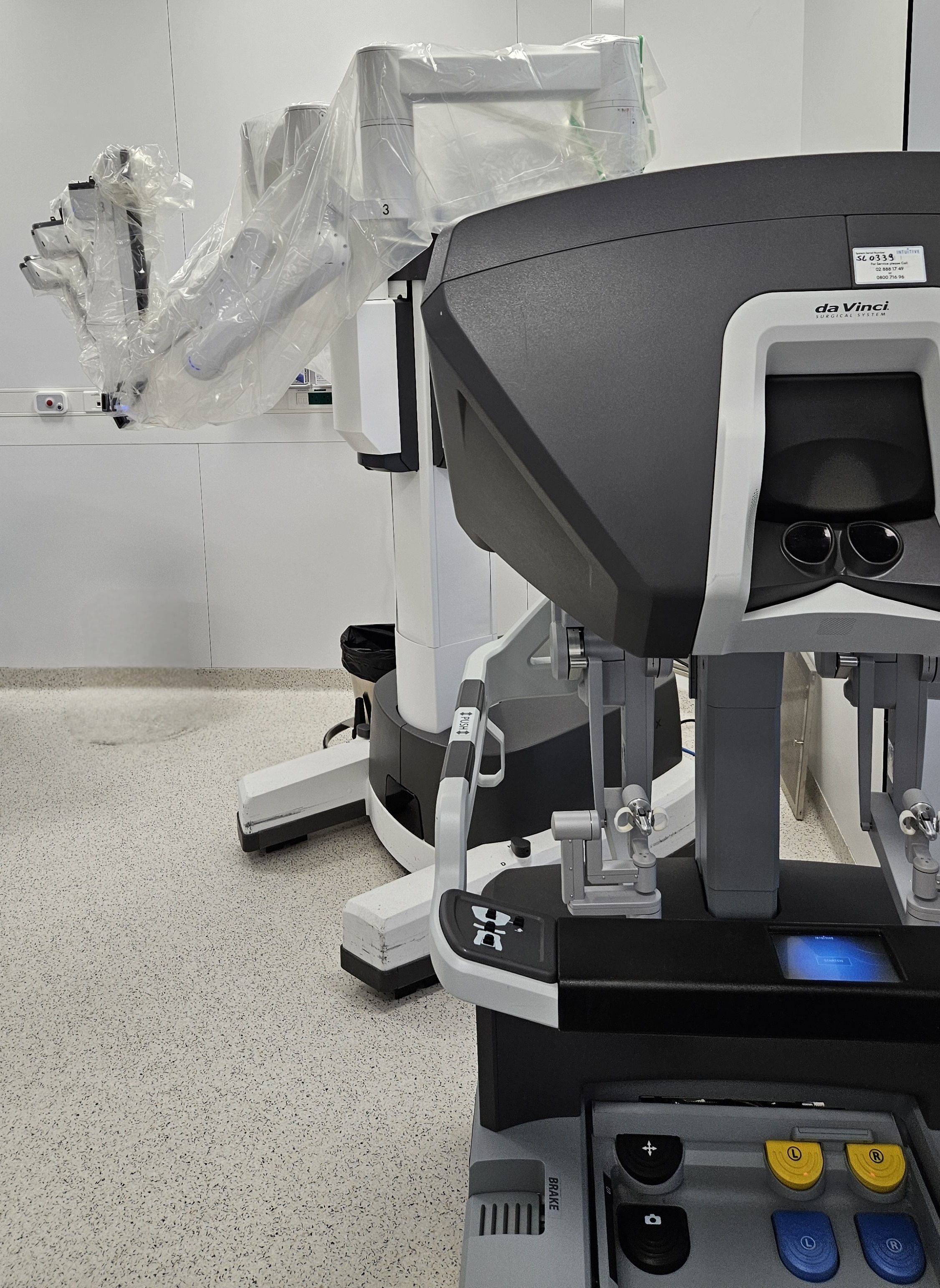
Da Vinci robotic system used in robotic prostatectomy
From diagnosis to treatment

The patient's journey with prostate cancer

1

Initial consultation and evaluation

Review of medical history, PSA test, digital rectal exam, and prior imaging studies. Dr. Lukas explains the diagnosis clearly and answers all questions from the patient and family.

2

Tumor staging

Analysis of biopsy results (Gleason/ISUP grade), multiparametric MRI, and when necessary, PSMA-PET scan to assess whether the cancer is localized or has spread.

3

Shared treatment decision

Based on staging, age, clinical conditions, and patient preferences, the options are discussed: robotic surgery, radiation therapy, active surveillance, or focal treatments. Dr. Lukas guides without pressure so the decision is fully informed.

4

Robotic surgery

Procedure performed at Hospital Vera Cruz, with a state-of-the-art robotic system. The surgery lasts an average of 2 to 3 hours and the patient uses a urinary catheter for approximately 7 days.

5

Post-operative follow-up

Periodic consultations to monitor PSA, urinary continence, and sexual function. Close, individualized follow-up is an essential part of quality oncological care.

Why robotic surgery

Advantages over open and laparoscopic surgery

🎯

Millimetric precision

The robotic system provides enhanced 3D vision and 7 degrees of freedom of movement, beyond the human hand — essential for preserving delicate structures around the prostate.

🩺

Nerve preservation

Enhanced vision and robotic precision allow identification and preservation of the neurovascular bundles responsible for erection and urinary continence.

🩹

Minimal incisions

Five small incisions of less than 1 cm each, instead of a 15–20 cm open incision. Less pain, less scarring, and lower infection risk.

Access to treatment

Health insurance coverage

Robotic prostatectomy may be covered by health insurance depending on the contract and medical indication. Contact us to verify.

* Coverage may vary depending on the health insurance contract. Please verify with your provider.

Recently diagnosed with prostate cancer?

Contact us for an evaluation. Dr. Lukas will review your tests, explain the staging, and discuss treatment options with you and your family — without rush and without jargon.

Talk to Dr. Lukas
Frequently asked questions

Questions about robotic surgery

No. Low-risk, slow-growing cancers can be monitored through active surveillance without immediate surgery. The decision depends on tumor grade (Gleason/ISUP), PSA, disease extent, and the patient's clinical condition. Dr. Lukas evaluates each case individually to recommend the best course.

Most plans cover it when there is documented medical indication. A request must be submitted with the medical report, biopsy, staging exams, and procedure code. Dr. Lukas's team guides you through this entire process to expedite approval.

Temporary urinary incontinence is common in the first months after surgery. With robotic technique and adequate preservation of continence mechanisms, the vast majority of patients regain full urinary control within 12 months. Pelvic floor exercises help accelerate this recovery.

It depends on tumor extent and the feasibility of preserving the neurovascular bundles. Robotic technique increases the chances of nerve preservation compared with open surgery. Even with preserved nerves, temporary erectile dysfunction may occur, improving progressively over 12 to 24 months. Cancer control takes priority, but quality of life is always considered in planning.

For localized cancers, a 4 to 8-week interval after diagnosis for planning and insurance authorization does not compromise oncological outcomes. The important thing is not to delay indefinitely. Dr. Lukas will advise on the best timing for each case.

Robotic prostatectomy is performed at Hospital Vera Cruz in Campinas, a reference hospital with complete surgical infrastructure and specialized anesthesiology team.

Recently diagnosed with prostate cancer?

Schedule a consultation to evaluate your case and understand all available treatment options.

Book via WhatsApp