The reference surgical treatment for benign prostatic hyperplasia, with rapid recovery and minimal risk of complications, according to urological literature data.
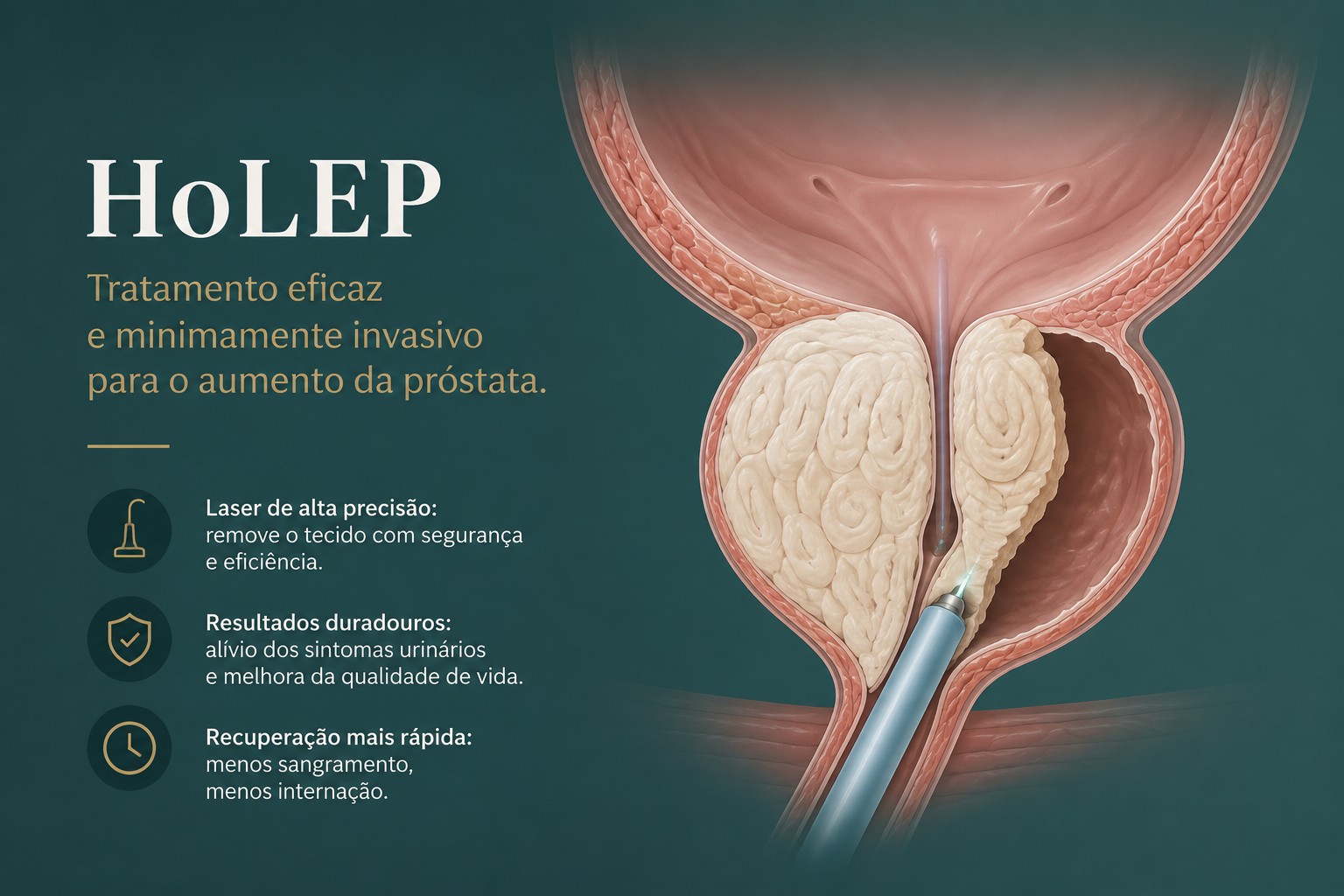
HoLEP (Holmium Laser Enucleation of the Prostate) is a minimally invasive surgery that uses a high-power holmium laser to precisely remove the prostate tissue obstructing urinary flow.
Unlike conventional surgery (TURP or open surgery), HoLEP is performed through a natural approach — with no external incisions — and allows complete removal of the obstructing tissue, regardless of prostate size.
The procedure is recognized by the European Association of Urology (EAU) and the Brazilian Society of Urology (SBU) as the reference surgical treatment for benign prostatic hyperplasia (BPH).
Difficulty urinating, thin or intermittent stream caused by an enlarged prostate.
Frequent nocturia that compromises sleep and quality of life.
Sudden, intense urge to urinate and difficulty holding back.
Feeling that the bladder does not empty completely after urinating.
Patients already on prostate medication without satisfactory symptom relief.
HoLEP is especially advantageous in large prostates, where other methods are less effective.
The tissue removed by HoLEP does not regrow in the treated area. Urological literature reports low long-term reintervention rates.
Hospital discharge usually within 24 to 48 hours. Return to everyday activities within a few days, with no prolonged restrictions.
Works for small, medium, and large prostates — including cases where other techniques are not indicated.
The laser cauterizes vessels while removing tissue, significantly reducing the risk of bleeding during and after surgery.
HoLEP has less impact on erectile function compared with open surgeries, representing an important quality-of-life advantage.
The removed tissue is always sent for pathological analysis, enabling incidental detection of prostate cancer.
Schedule a consultation with Dr. Lukas Salles in Indaiatuba or Campinas.